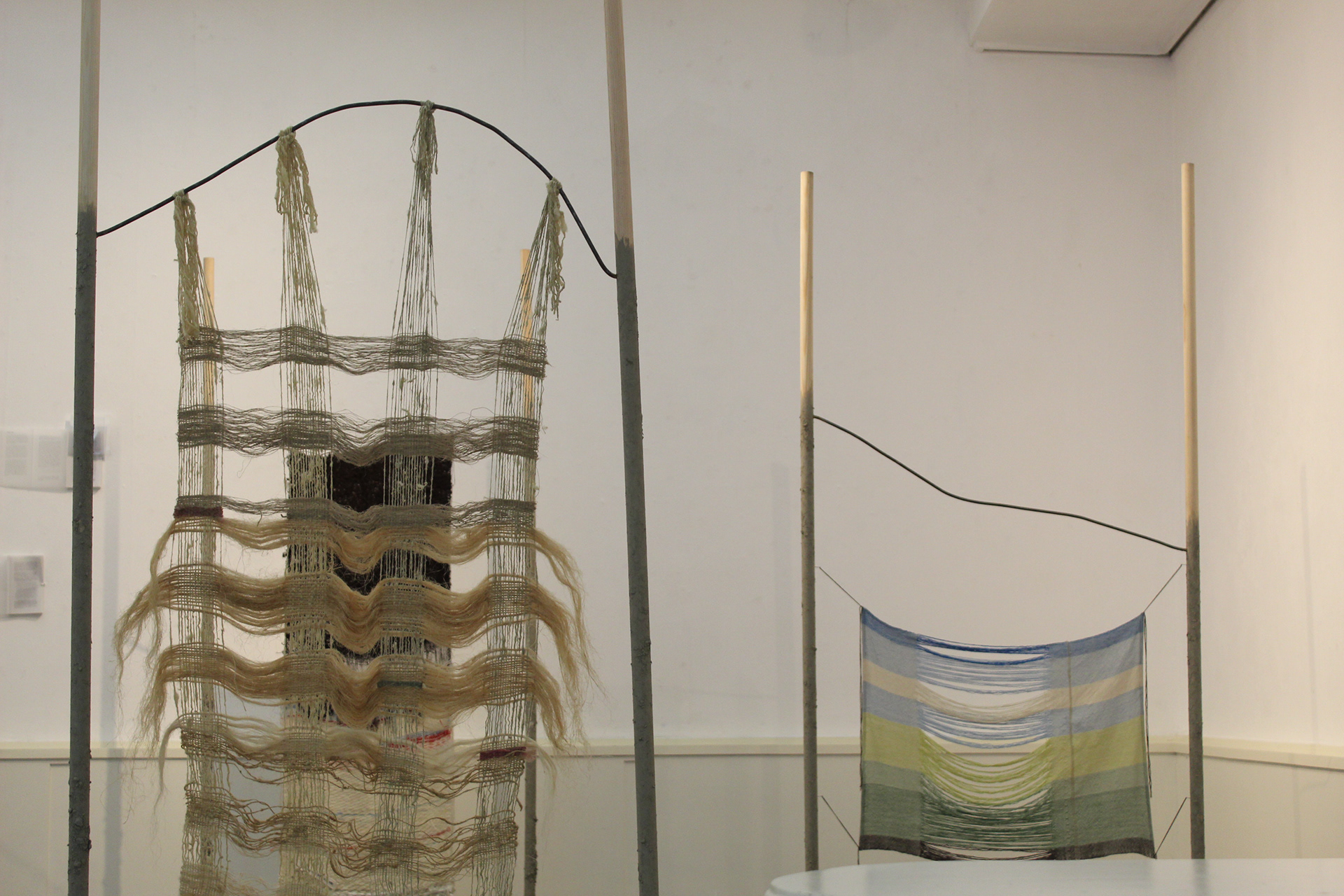
Orden van het Noorden / Northern Orders explores the interweaving of more-than-human natural systems and the human drive to control and possess, two forces that meet on the salt marshes of Groningen: a landscape shaped by tidal rhythms and human-imposed steering mechanisms. With handweaving as a system flowing from the human hand, and binding patterns generated from numerical water data, the materiality of the textiles carries questions of ownership, use, and adaptation of this so called reclaimed land and its resources. The installation visualizes shifts in power structures and investigates how artistic co-creation can offer new perspectives on our surrounding landscapes. Thus the work continuously reflects on the tension between natural systemicity and human ordering – and on the ways we attempt to shape the world to our hand and desire.
Presented in Kunstlievendgenootschap Pictura, Groningen
Published in the Dutch designers Yearbook '25-'26 by BNO
On the land
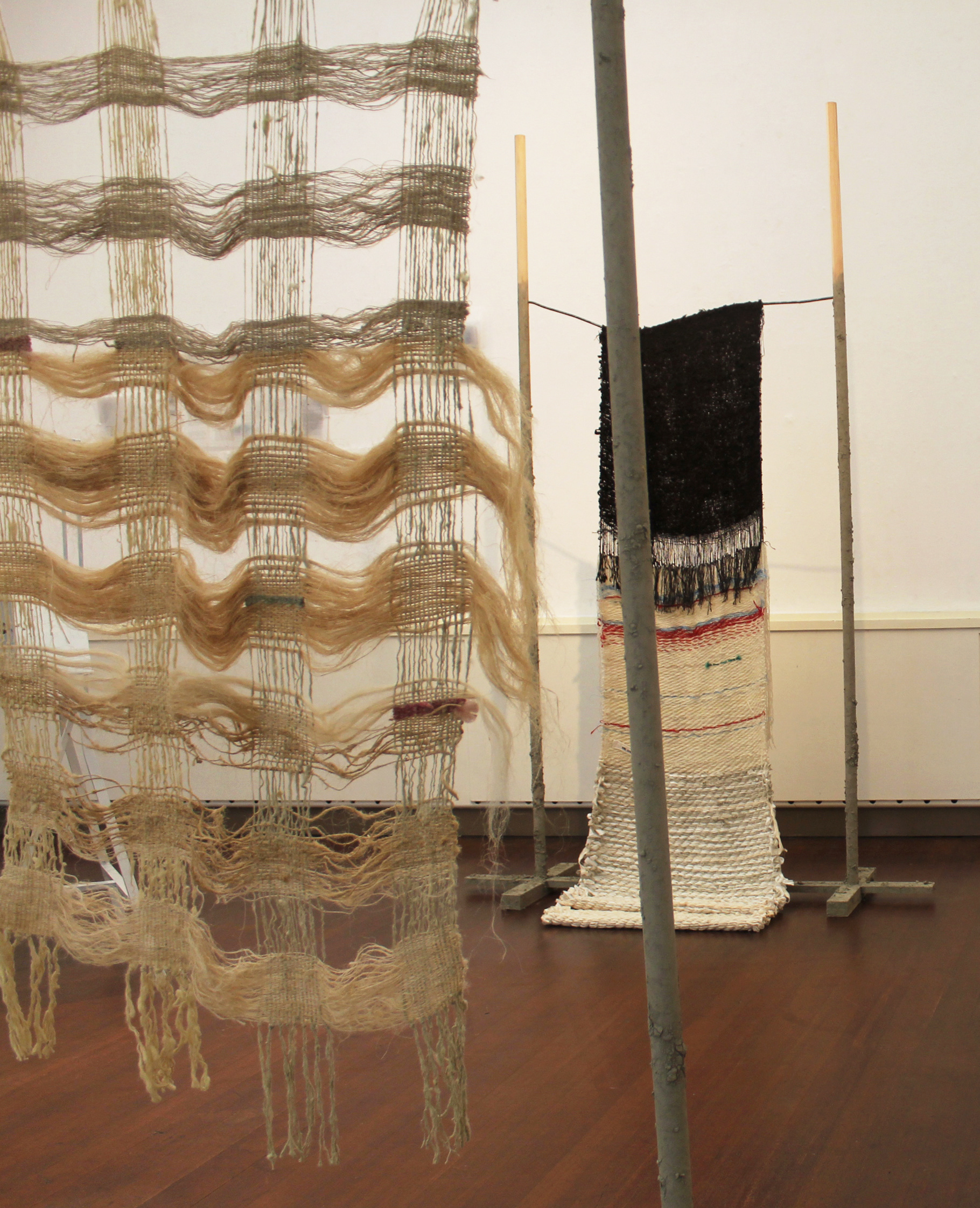
warp - handspun wool dyed with saltmarsh vegetation and flax
weft - raw, selfgrown flax fibers, handspun linen yarns, coloured wool from mated ewes
Bindings shaped by the translation of percentual growth of the Dutch saltmarshes into a rhythm of shaft control
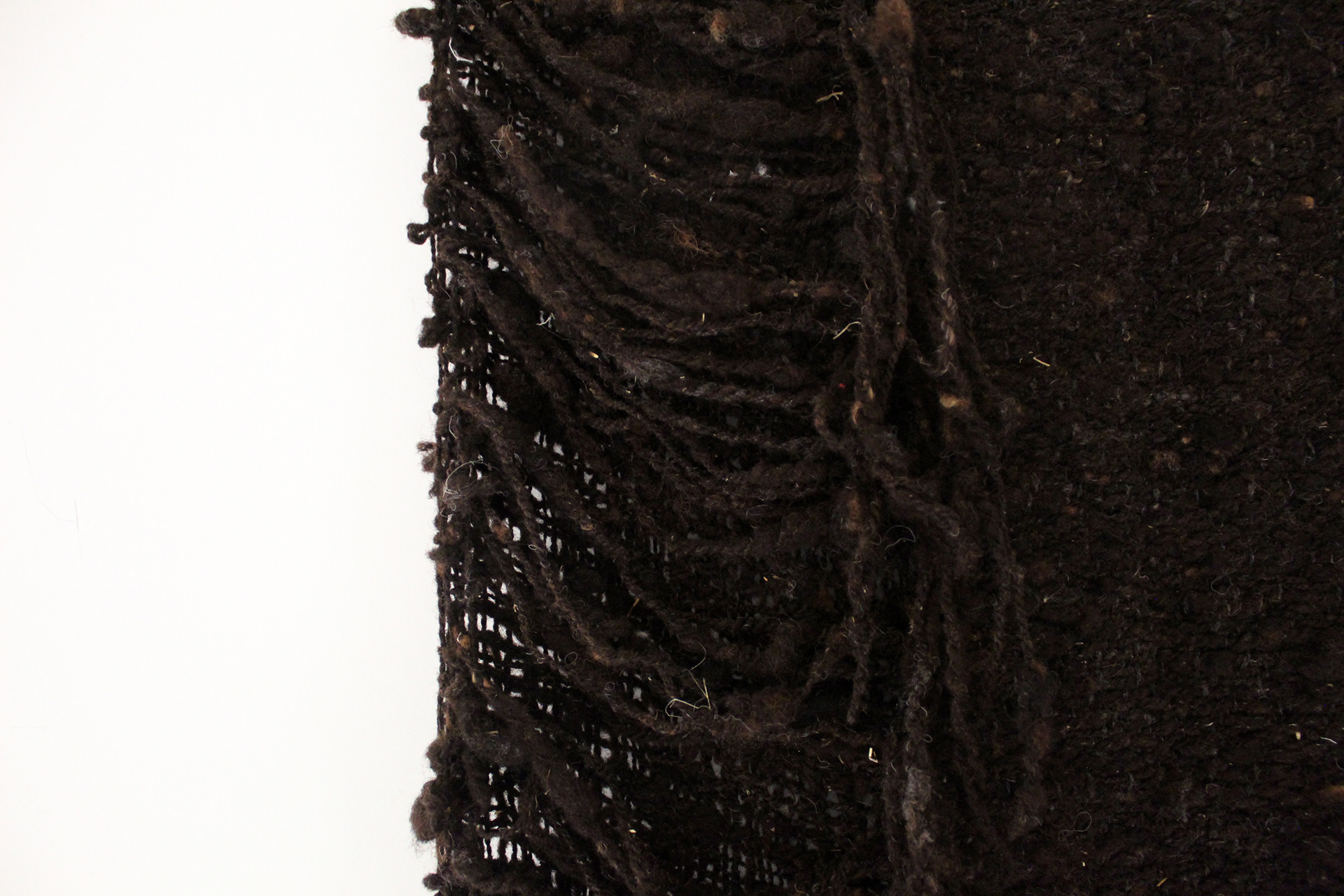
warp - handspun brown sheep wool
weft - handspun brown sheep wool
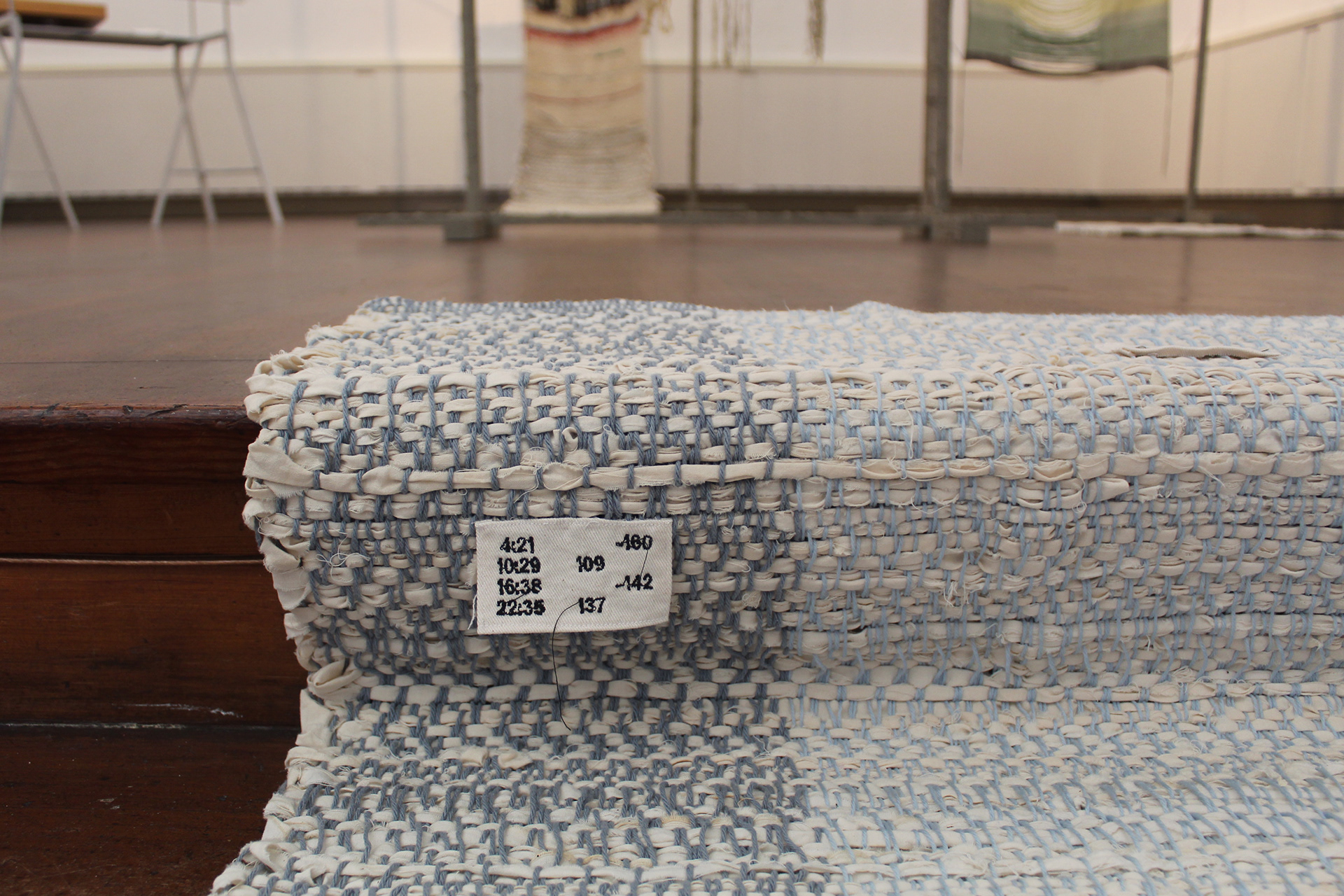
Bindings shaped by the translation of numerical tide chart data into a rhythm of shaft control
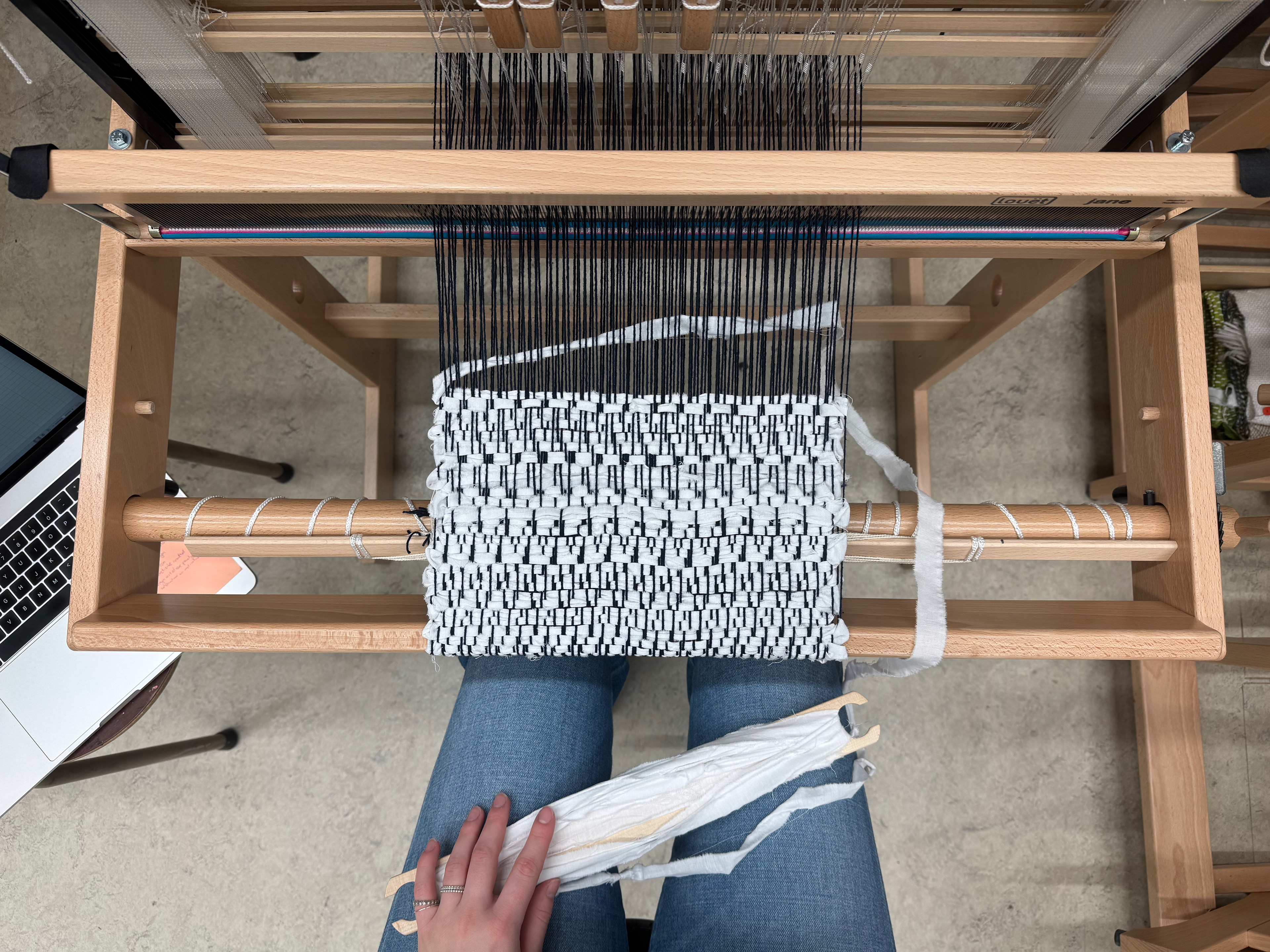
warp - secondhand cotton yarn
weft - seaweed dyed rags
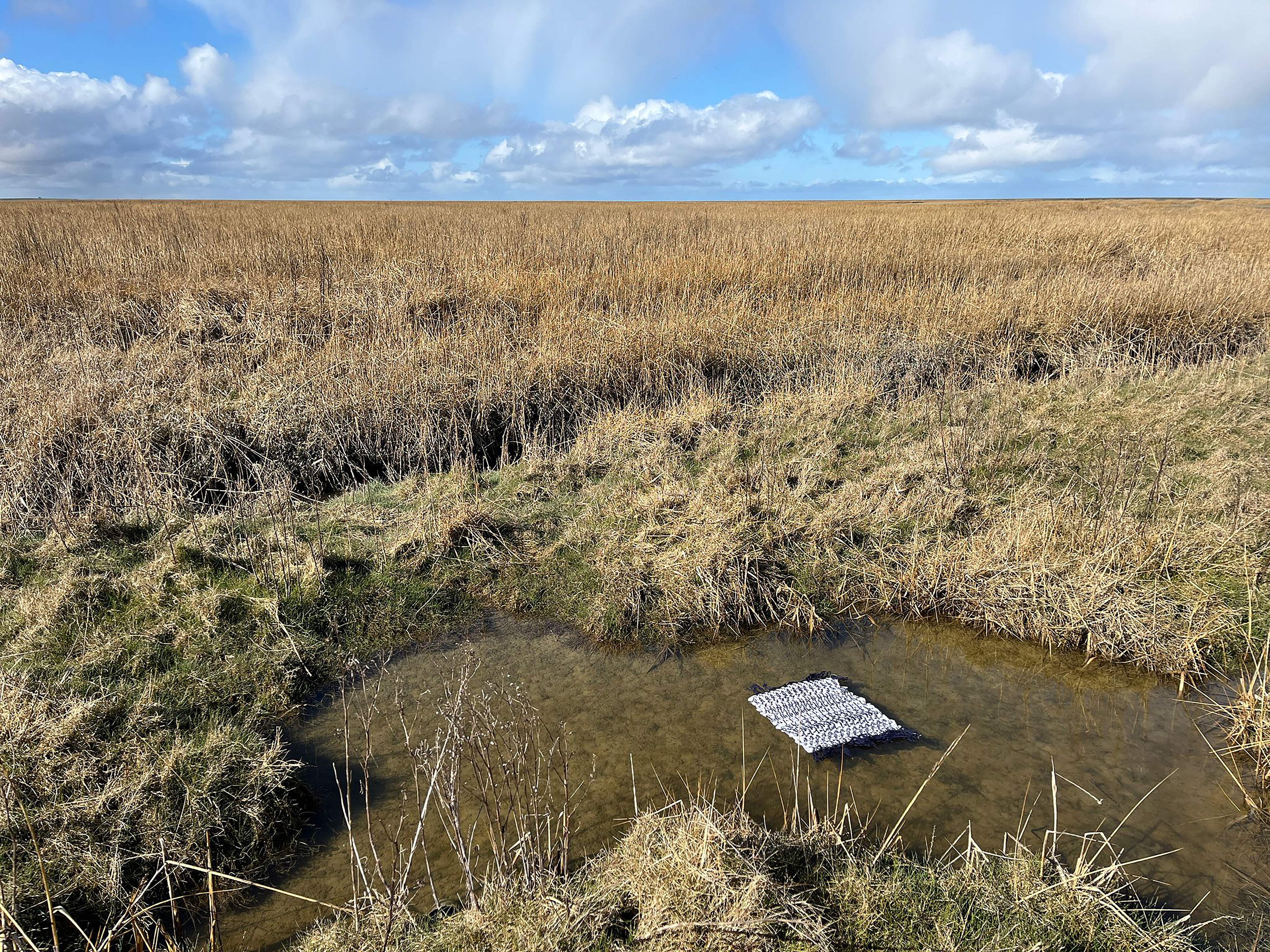
Washed-up land
warp - handspun white sheep wool
weft - seaweed and soil dyed rags, handspun white sheep wool, washed-up yarns and cords
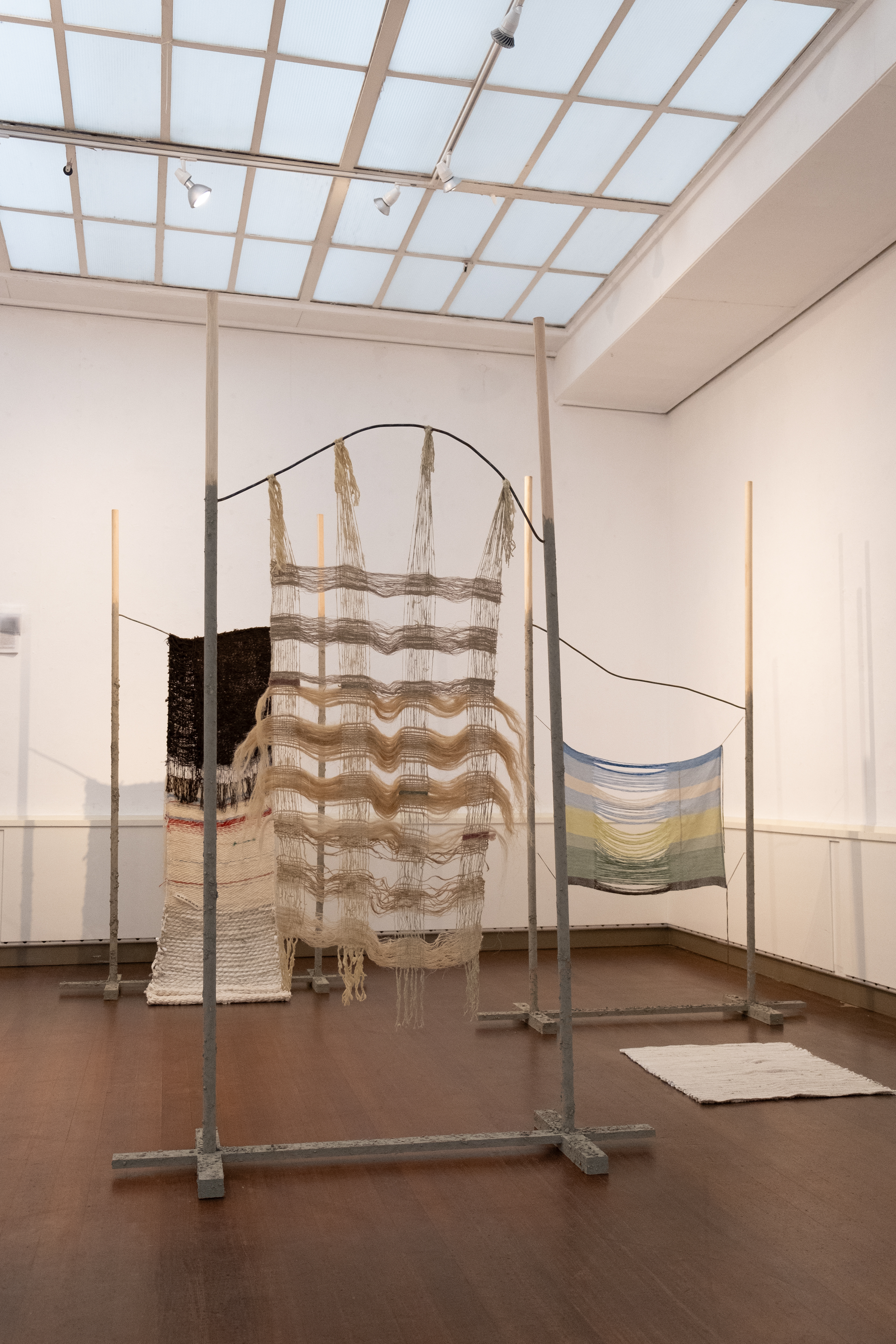
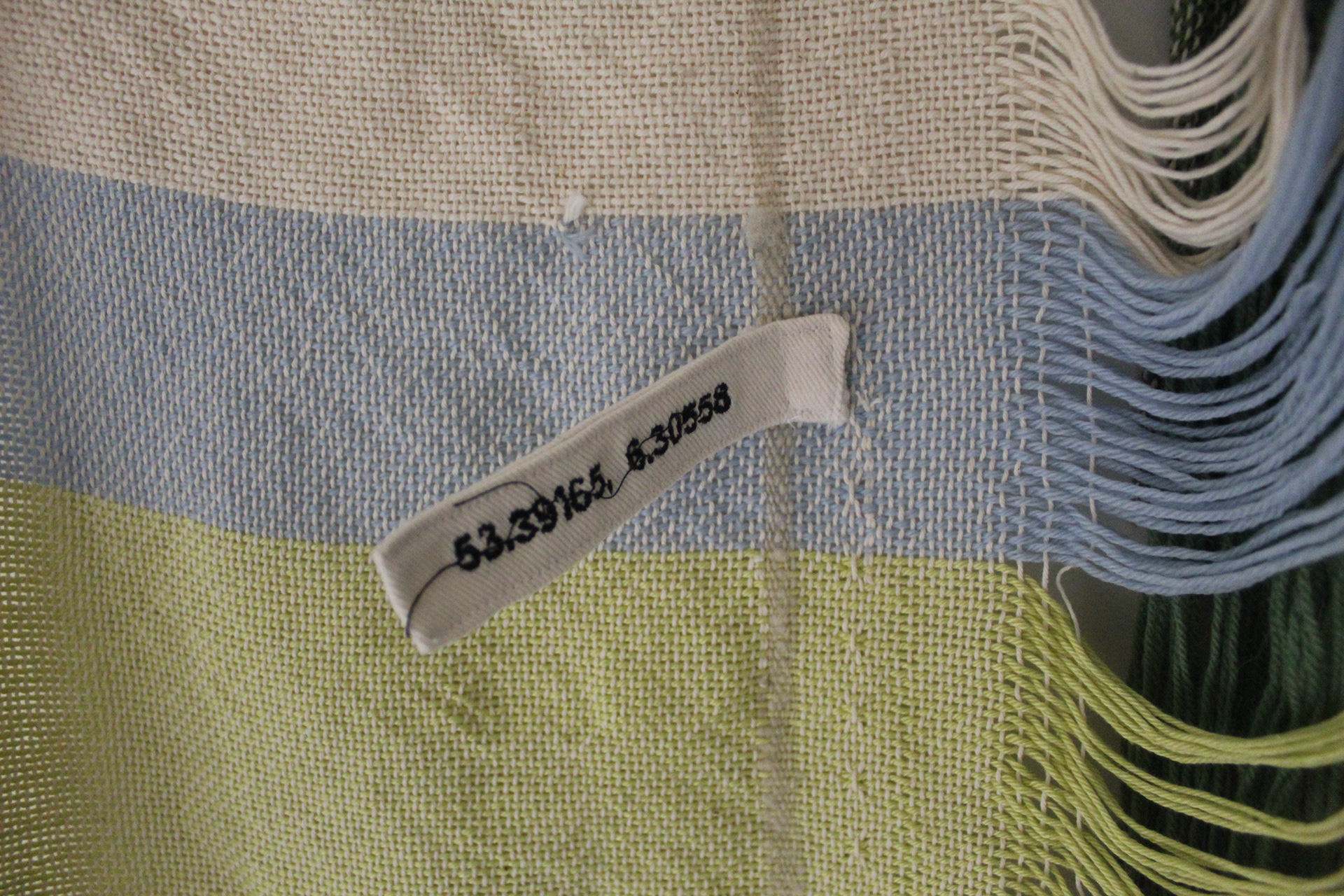
hoi
A reflection on the human capitalistic desire to grow bigger, go faster, creating abundancy and uniformity
An appreciation for slow production, minimalism, humility, modesty and natural cycles
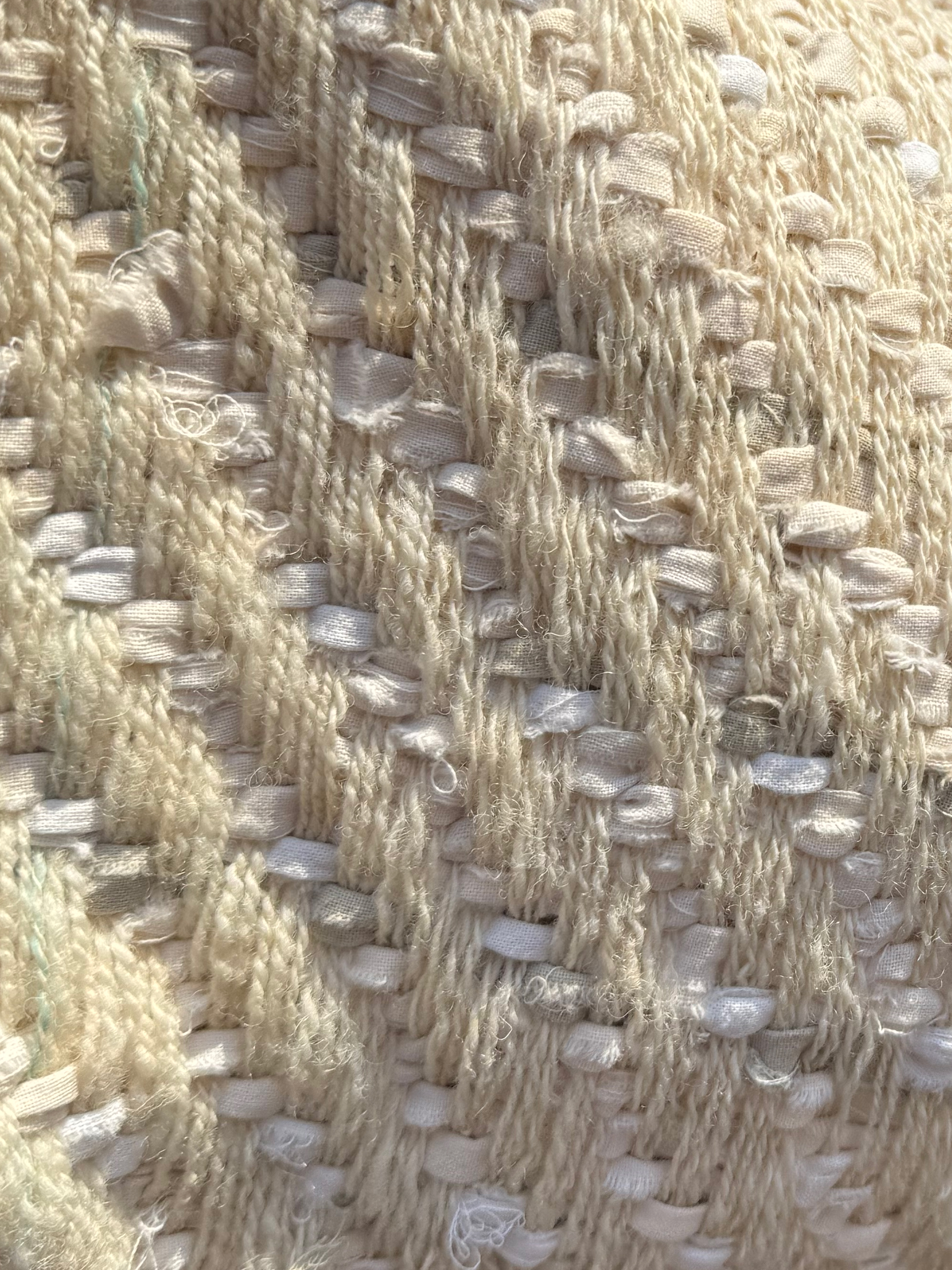
warp - secondhand cotton and wool yarns
weft - secondhand cotton yarn and locally gathered, naturally shed sheep wool
hoi
Tide twill
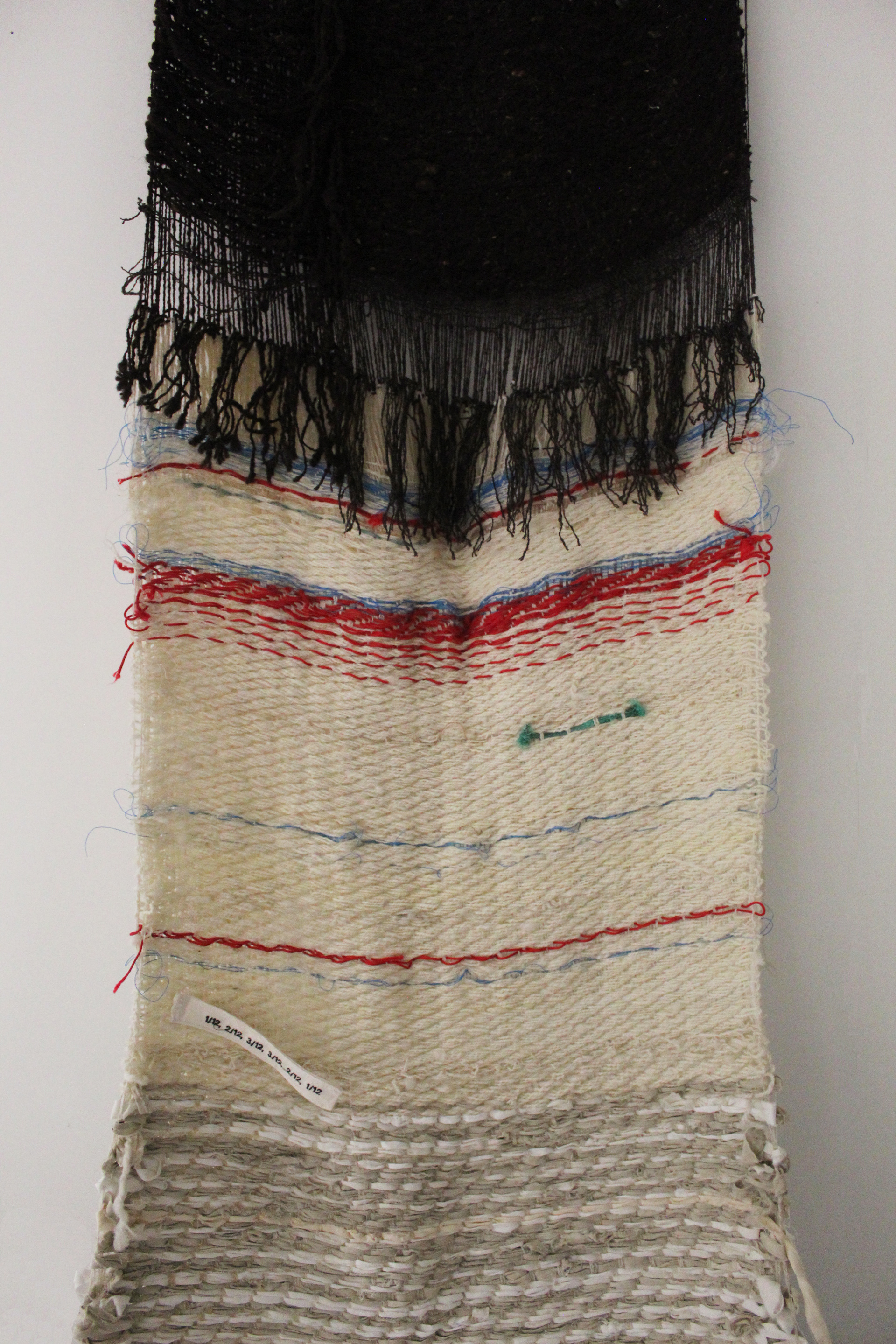
There are approximately six hours between each low and high tide and the total of water that arrives in that time can be thought of as being split into twelve equal volumes that are shared out amongst the six hours unevenly:
1/12, 2/12, 3/12, 3/12, 2/12, 1/12
(How to Read Water, Tristan Gooley, 2016)
Appropriating the land
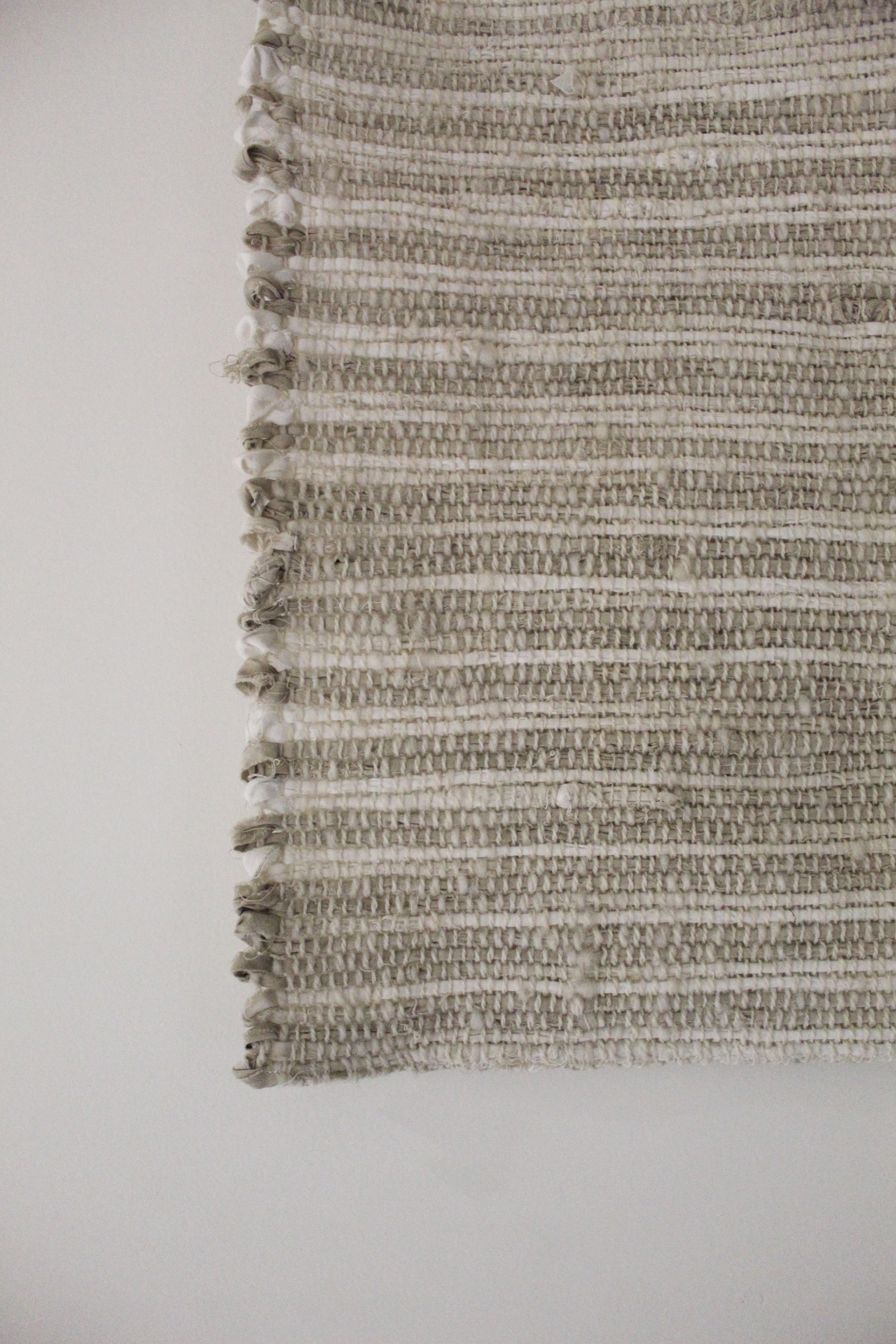
warp - handspun white sheep wool
weft - soil dyed rags
hoi